Can you actually make money on prediction markets?
8 min read
By the Totalis team. We build the combo platform for prediction markets on Hyperliquid.
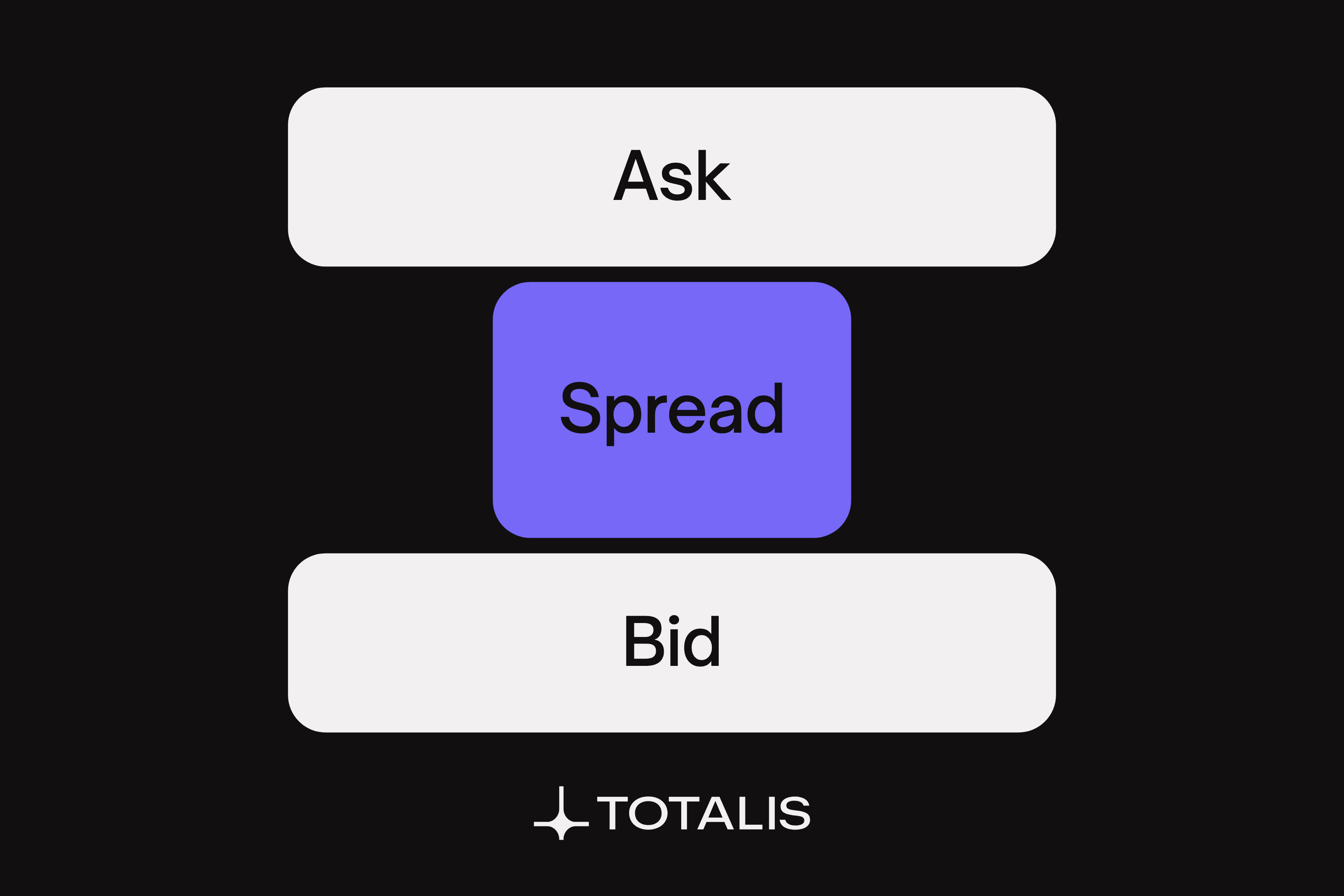
Yes, you can make money on prediction markets, but most people who try don't. The largest study of Polymarket so far, covering 2.4 million users from November 2022 to March 2026, found that about 69% of them ended with a loss and that the top 1% of winners took 76.5% of all the profits. The most successful accounts provided far more liquidity with limit orders than the rest, and earned the spread that the losers paid.
Contents
Do more people make or lose money on Polymarket?#
More lose. Pat Akey, Vincent Grégoire, Nicolas Harvie and Charles Martineau studied Polymarket's complete trade history from 11 November 2022 to 29 March 2026: over 2.4 million users and $67 billion of volume. In their paper, dated 28 August 2026. A "user" there is a wallet address, and profit or loss values open positions at their latest price, so it includes trades that had not yet settled:
- Roughly 69% of users ended the sample with a loss. The often-repeated claim that 90% of traders lose is not what this data shows, but a clear majority do.
- Profits are concentrated. The top 0.1% of users with a profit captured 51.2% of all gains and the top 1% captured 76.5%.
- Successful accounts provided more liquidity. The top 0.1% of earners did 47.3% of their volume as makers with resting limit orders, against 17.1% for the bottom 95%. Winners were net earners of the bid-ask spread and losers paid it.
- The spread explains some losses, not the worst ones. Removing even the minimum spread would move 18.5% of losers to break-even or better, but the biggest losses came from forecasting errors.
- Insider trading doesn't explain the top. Of the 100 most profitable users, 42 made most of their gains in a few markets, mostly high-profile sports and the 2024 US election, a pattern the authors judge more consistent with skill or modelling than inside information.
So, are people really making money on Polymarket? A minority are, and a small minority make most of it.
Do you make real money on Kalshi?#
Yes, the money is real: a winning contract pays $1 when the market settles, per Kalshi's settlement docs. Whether you come out ahead is another question.
Constantin Bürgi, Wanying Deng and Karl Whelan studied Kalshi from its 2021 launch to April 2025: 313,972 sampled prices across 46,282 Yes contracts in 12,403 events. The authors model that period with Kalshi's pre-2025 fees, charged to takers only, so the results predate today's maker fees. Their January 2026 paper found:
| Finding | Result |
|---|---|
| Average return on a Kalshi contract, before fees | About −20% |
| Contracts bought by takers, after fees | −31.46% on average |
| Contracts bought by makers | −9.64% on average |
| Contracts priced under 10 cents | Buyers lost over 60% of their money |
| Contracts priced above 50 cents | Small positive returns |
These are averages per contract, not per trader, and the pre-fee returns of all trades net to zero; the average comes out negative because losses on cheap contracts are large relative to their price. The pattern, cheap longshots losing and favourites earning a little, is the favourite-longshot bias, and it held across Kalshi's market categories, though the authors see some sign it is shrinking.
What does a trade have to beat?#
Its break-even chance: the total cost divided by what the shares pay if they win. On 11 November 2026 at 10:03 UTC, the New York Knicks were about 62% to beat the Cleveland Cavaliers that night. Here is what buying 100 Knicks shares at the ask cost on each venue, from each venue's order book:
| Venue | Ask | Cost of 100 shares | Fee | Pays if the Knicks win | Break-even chance |
|---|---|---|---|---|---|
| Kalshi | 0.62 | $62.00 | $1.6492 | $100.00 | 63.65% |
| Polymarket | 0.63 | $63.00 | $1.17 | $100.00 | 64.2% |
| HIP-4 on Hyperliquid | 0.62516 | $62.52 | $0.14 at a winning settlement, assumed | $99.86 | 62.6% |
Kalshi charges takers 0.07 × contracts × p × (1 − p), per its fee schedule, and its fee rounding docs keep balances of members who trade with Kalshi directly to $0.0001; members clearing through a broker are rounded to the cent and pay up to a cent more. Polymarket charged this sports market's rate of 0.05 on the same formula, per its fee page. Hyperliquid charges nothing to open an outcome position and charges when it closes or settles, but publishes no rate table for outcome markets, and its HIP-4 overview page, linked below, still says outcome fees are zero. The 0.14% is what we saw one base-tier wallet pay on each of four winning settlements in markets from the same deployer, Outcome: three NBA games on 11 November and an NFL game on 10 November; applying it to the Knicks shares is our assumption. The fee formulas are in Kalshi fees and Polymarket fees.
To profit on average, you need to be right about the Knicks more often than the break-even chance, not more often than the displayed price. At Kalshi's prices that meant a 63.65% view against a 61.5% midpoint: an edge of more than 2 percentage points just to stand still.
Getting in and straight back out costs too. Buying 100 Knicks shares at the ask and selling them at the bid at once would have lost:
| Venue | Spread | Fees in and out | Round-trip cost |
|---|---|---|---|
| Kalshi | $1.00 | $3.3145 | $4.31 |
| Polymarket | $1.00 | $2.34 | $3.34 |
| HIP-4 on Hyperliquid | $0.002 | $0.09, assumed rate | $0.09 |
On Polymarket that is about 5% of the stake. On Kalshi it was about 7%. HIP-4's book for this game was tighter at that moment, and its fee is charged only on the way out (we assumed the same 0.14% on the sale), but its depth was smaller: the best ask held 680 shares. Prediction market odds explained works the same game through with $100 on each venue.
Who makes money on prediction markets?#
Four groups make money with some regularity, and none of them is a casual taker:
- Market makers. They post limit orders on both sides and earn the spread, the pattern behind Polymarket's winners above and Kalshi's better maker returns. Venues pay them on top: Polymarket's taker fees fund a Maker Rebates Program paid out daily, and on HIP-4, Outcome pays liquidity rewards on the markets it lists (HIP-4 volume).
- Informed specialists. Traders with a model or deep knowledge of one sport or one kind of event. Akey and co-authors find that the most profitable users' contracts resolved their way about 20 percentage points more often than the prices they paid implied, while the biggest losers' did 15 to 18 points worse.
- Arbitrageurs. Bots that buy every outcome of an event for less than $1. One study of Polymarket estimated about $40 million of arbitrage profit realised in markets that resolved from April 2024 to April 2025, without deducting trading fees because Polymarket charged none then. The gaps are small and short (prediction market arbitrage).
- The venues. Kalshi says it makes money from transaction fees rather than positions, and Polymarket and Hyperliquid charge trading fees too.
Can you lose more than you invest on Polymarket?#
No, not when you buy shares. The most you can lose is what you paid. Polymarket's terms of use say that by trading "you can lose up to the entire amount of the cryptoassets supplied to the contract", and Kalshi's fee schedule page says members "risk losing their cost to enter any transaction, including fees". Hyperliquid's HIP-4 markets are fully collateralized, with no leverage and no liquidations.
Two cases need care:
- No is a purchase too. Taking the other side of an outcome means buying No, so its cost is also your maximum loss.
- Perpetual futures are different. Kalshi's fee schedule now includes perpetual futures, and Polymarket's docs cover perps. Leverage and margin work differently there, and this answer doesn't cover them.
A Totalis Combo is the same: the stake, including its 1.5% entry fee, is the most you can lose.
What separates winners from losers in the data?#
The studies point to habits, not secrets:
- Making instead of taking. In Akey and co-authors' data, a one-standard-deviation higher share of maker volume went with a 9 percentage point higher chance of finishing ahead, the largest effect they measured.
- Avoiding cheap longshots. On Kalshi, contracts under 10 cents were the worst place to be for makers and takers alike.
- Fewer small trades. Among Polymarket users with more than 100 trades, more trades went with a lower chance of finishing ahead, which the authors read as overconfidence.
- Knowing one area well. Many top Polymarket earners concentrated on a few markets.
None of it removes the core problem: trading is zero-sum before fees, so every dollar you win, someone else loses. This page is not financial advice.
Where Totalis fits#
Totalis trades Hyperliquid's HIP-4 outcome markets as singles on the HyperCore order book and as Combos of 2 to 5 legs. Singles in the app pay a 0.1% builder fee on top of Hyperliquid's fee, per the Totalis fees and limits page, which keeps the break-even close to the price; low fees lower the bar, they don't give you an edge. A Combo is priced differently: market makers quote its payout and take the other side, so their margin is in the quote (how a Combo is quoted and settled). Totalis is not available to US persons, and signing up takes an invite code. If you can use it, compare a price in the Totalis app with the break-even arithmetic above before you trade.
How we counted#
- Prices. Polymarket's CLOB API and Hyperliquid's
l2Bookinfo request for the Knicks v Cavaliers game, read at 10:03 UTC on 11 November 2026. - Fees. Each venue's published formula; Kalshi's at the $0.0001 precision it applies to direct members. The Hyperliquid rate is an observation, not a published rate: the 0.14% one base-tier wallet paid on four winning settlements on 10 and 11 November, which we assumed for the Knicks settlement and the early sale. Wallets with volume or staking discounts pay less. The round trip sells at the best bid: 0.62 on Polymarket and 0.62514 on HIP-4.
- Kalshi. Kalshi prices come from the order book of Kalshi's market for the game at 10:03 UTC. Its asks are 1 minus the best opposing bid, and the round trip sells at its 0.61 bid.
- Studies. Figures are quoted from the papers linked above; we did not rerun their data.
Sources and further reading#
- Akey, Grégoire, Harvie and Martineau, Who Wins and Who Loses in Prediction Markets? Evidence from Polymarket, accessed 2026-11-11
- Bürgi, Deng and Whelan, Makers and Takers: The Economics of the Kalshi Prediction Market, accessed 2026-11-11
- Saguillo, Ghafouri, Kiffer and Suarez-Tangil, Unravelling the Probabilistic Forest: Arbitrage in Prediction Markets, accessed 2026-11-11
- Kalshi fee schedule, accessed 2026-11-11
- Polymarket trading fees, accessed 2026-11-11
- Polymarket terms of use, accessed 2026-11-11
Related: what Kalshi is, what Polymarket is, lowest-fee prediction markets, prediction markets vs sportsbooks.
This article is for informational purposes only and is not financial advice. Prediction market positions can lose their entire value. Availability of markets and features depends on your jurisdiction and each platform’s terms.